
Vessantara Jataka
Vessantara Jataka
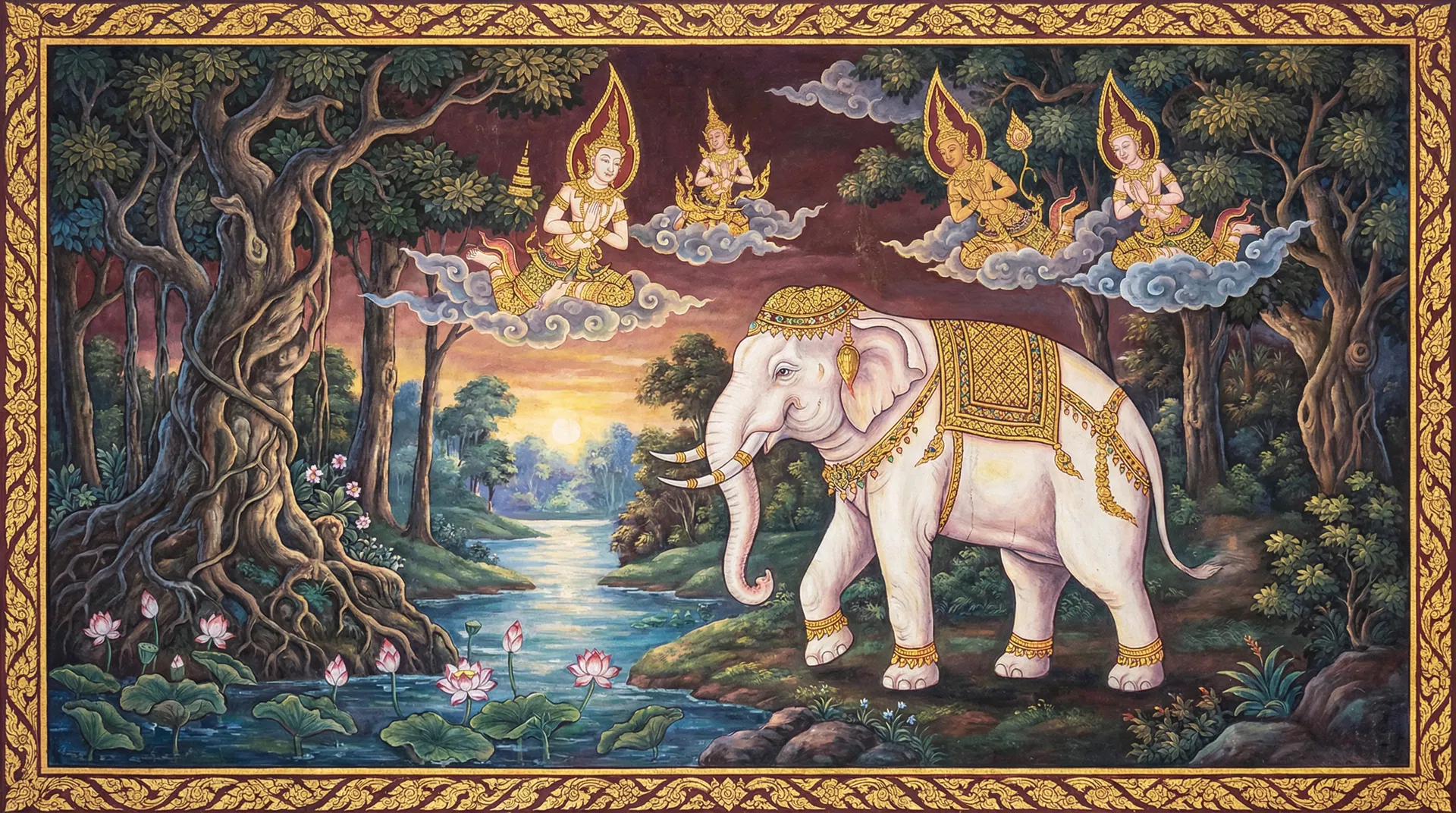
In the ancient kingdom of Sibi, there reigned a king named Vessantara, a prince renowned throughout the land for his unparalleled generosity. His giving was legendary, his compassion boundless, and his virtue a beacon of light. He possessed a magical white elephant, adorned with jewels, which brought rain and prosperity to his kingdom. This elephant was the pride of Sibi.
One scorching summer, when the land was parched and the rivers ran dry, a delegation of Brahmins from a neighboring kingdom, Kalinga, arrived at Vessantara's court. Their land was in the grip of a terrible drought, and their crops had withered. They had heard tales of the generous Prince Vessantara and had come with a desperate plea.
'Oh, noble Prince,' the lead Brahmin implored, bowing low, 'our kingdom is dying. We have no rain, our people are starving. We have heard that you possess a magnificent white elephant, which brings rain wherever it goes. We beg you, in the name of compassion, to grant us this elephant, so that it may save our people.'
Prince Vessantara, seeing the desperation in their eyes and hearing the plight of their kingdom, felt his heart ache. He knew that the elephant was vital to his own kingdom's well-being, but his vows of generosity and compassion were absolute. He could not refuse a genuine plea for help.
'Take the elephant,' Vessantara declared, his voice firm despite the enormity of his sacrifice. 'May it bring rain and prosperity to your land and save your people from suffering.'
The Brahmins were overjoyed and, with great ceremony, took the white elephant away. However, the people of Sibi were furious. They felt betrayed by their prince's impulsive act. The king, Vessantara's father, was forced to act to appease his subjects. He banished Prince Vessantara, his wife Maddi, and their two young children, Prince Jali and Princess Kanha, from the kingdom.
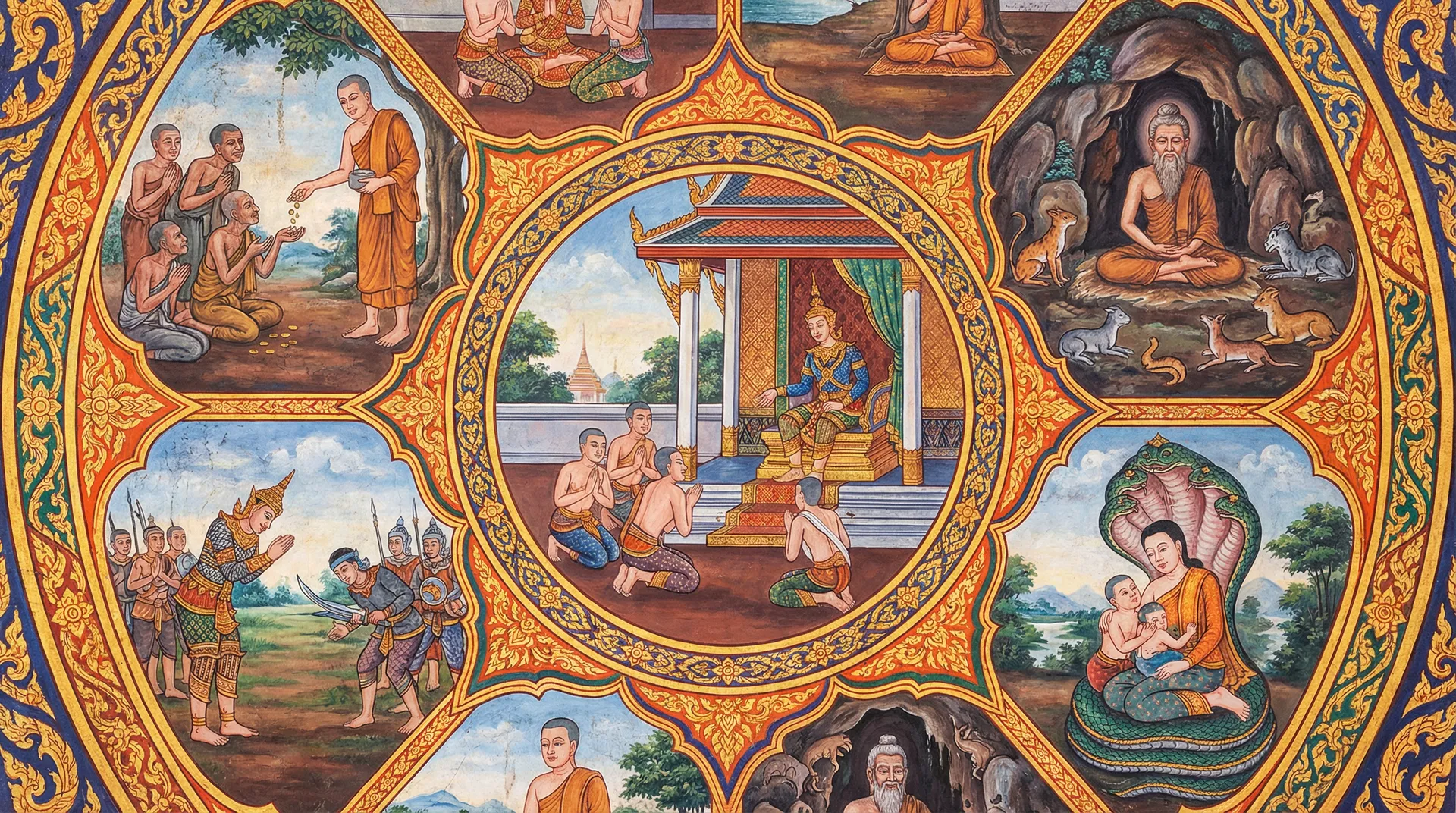
Heartbroken but resolute, Vessantara led his family into the deep forest, seeking refuge. They lived a simple life, subsisting on fruits and roots. One day, as Vessantara and his wife were meditating, a hunter named Jujaka from Kalinga, driven by greed and a desire for reward, came to their hermitage. He had heard that Vessantara had given away the rain-making elephant and suspected the prince might still possess other valuable gifts.
Jujaka approached Vessantara and, seeing the prince and his wife, deceitfully posed as a traveler seeking shelter. Vessantara, ever hospitable, welcomed him. Later, Jujaka saw the prince's two young children playing near the hermitage. He recognized them and, with a cruel heart, plotted to seize them and claim a reward from the king of Kalinga.
Under the cover of night, Jujaka stole the children away. When Maddi returned and found her children missing, she was distraught. Vessantara, though deeply pained, knew he had to remain true to his path. He pursued Jujaka, but when he caught up, Jujaka threatened the children, demanding a hefty ransom. Vessantara, having nothing else of great value to give, offered Jujaka all his royal possessions and wealth. Jujaka, however, was only interested in the children.
As Jujaka was about to inflict further harm, Sakka, the king of the gods, intervened. He appeared in disguise and offered Vessantara immense wealth in exchange for the children, which Vessantara gladly accepted, knowing his children would be safe. Sakka then returned the children to their grandfather, King of Sibi, who was overjoyed to be reunited with them. The King of Kalinga, having received the rain-making elephant, experienced abundant rainfall and prosperity.
Prince Vessantara and Queen Maddi, having endured immense hardship and sacrifice, eventually returned to their kingdom, their virtue having been tested and proven. The story of Vessantara's extraordinary generosity, his willingness to give away even his beloved children and his kingdom for the sake of others, became the most celebrated Jataka tale. It underscored the ultimate meaning of selfless giving and the profound spiritual merit gained through such sacrifice.
— In-Article Ad —
💡කතාවේ ආදර්ශය
True generosity requires immense sacrifice, including giving away what is most precious, to alleviate the suffering of others.
පාරමිතා: Generosity (Dāna Paramī)
— Ad Space (728x90) —
ඔබට ප්රිය ජාතක කතා
 423Aṭṭhakanipāta
නැණවත් කොටි
නැණවත් කොටි පුරාණ කාලයෙහි බරණැස් නුවර රජ කළ බ්රහ්මදත්ත රජුගේ රාජ්ය කාලයෙහි, බෝධිසත්වයන් වහන්...
💡 නැණ සහ ප්රඥාව භාවිතා කිරීමෙන් ඕනෑම ගැටලුවකට විසඳුම් ලැබේ. සාමූහික ශක්තියෙන් ඕනෑම දෙයක් ජය ගත හැකිය.
 356Pañcakanipāta
පරාර්ථකාමී ගුත්තිල
පරාර්ථකාමී ගුත්තිල ඈත අතීතයේ, බරණැස් නුවර රජකම් කළේ ධර්මිෂ්ඨ වූ බ්රහ්දත්ත නම් රජෙකි. එදා බරණැස්...
💡 පරාර්ථකාමී බව හා ත්යාගශීලී ගුණය, කිසි කලෙකත් අඩුවන්නේ නැත. එය සැම විටම ආශිර්වාද හා සතුට ගෙන එයි.
 289Tikanipāta
Maha-Ummagga Jataka
Maha-Ummagga JatakaIn the ancient kingdom of Videha, ruled a wise and just king named Mandhatr. His ...
💡 Intelligence coupled with ethical application benefits all.
 347Catukkanipāta
ඥානාලෝකයේ ධේනු
ඥානාලෝකයේ ධේනුඈත අතීතයේ, සශ්රීක ගම්මානයක, 'ඥානාලෝකයේ ධේනු' නම් වූ, ඉතාමත් ඥාණවන්ත හා ධර්මිෂ්ඨ ධේනුව...
💡 ලෝභය, ඊර්ෂ්යාව, සහ අහංකාරය ජීවිත විනාශ කරන අතර, ඤාණය, ධර්මය, දයාව, මෛත්රිය, සහ කරුණාව ජීවිතයට සතුට, සාමය, සහ සමෘද්ධිය ගෙන දෙන අතර, ධර්මය මගින් කර්මය වෙනස් කළ හැකිය.
355Pañcakanipātaධර්මිෂ්ඨ මුවා
ධර්මිෂ්ඨ මුවා (The Virtuous Deer) ඈත අතීතයේ, ඝන වනාන්තරයක, රජෙක් රජකම් කළේය. ඔහු ධර්මිෂ්ඨ, යුක...
💡 ධර්මය හා සත්යය අනුගමනය කිරීමෙන්, ශාරීරික ශක්තියට වඩා බලවත් ජයග්රහණයක් ලබා ගත හැකිය.
359Pañcakanipātaසම්බුල ජාතකය
සම්බුල ජාතකය නැගෙනහිර දිග බරණැස් නුවර රජකම් කළ බරණැස් රජ්ජුරුවන්ගේ රාජධානියේ, ඈත ගම්දනෙක, එක් ...
💡 සමාව දීම යනු දුර්වලකමක් නොවේ, එය ශක්තියේ ලක්ෂණයකි. ඊර්ෂ්යාව සහ කුමන්ත්රණ අවසානයේ විනාශයට හේතු වේ. ධර්මිෂ්ඨකම සහ යහපත් ගුණාංග ඕනෑම අභියෝගයකින් ජය ගැනීමට උපකාරී වේ.
— Multiplex Ad —